Shock G: Funk & Hip-Hop Fusion Redefining 90s Soundscapes
"Genre was never a prison; it was a playground."
Shock G didn't just make beats; he designed sonic architecture that bridged the gap between funk and hip-hop. His experimental approach turned simple tracks into immersive, multi-dimensional experiences.
* Merging the fluid grooves of funk with the sharp impact of hip-hop. * Using vocal layering as a sophisticated musical instrument. * Crafting customized production strategies that maximize an artist's unique personality.
Why did he push the boundaries of genre?
Late at night in the dim studio, a heavy bassline vibrates through the floor and hits his chest.
In a dim studio late at night in 2025, the air feels heavy and cool as you adjust your headphones. The monitor displays a jagged waveform, and a deep, pulsing bass vibrates through the floor, hitting your chest with every beat.
Shock G refused to stay trapped within the rigid structures of traditional hip-hop. He sought to blend the elastic, soulful grooves of funk with the aggressive, rhythmic precision of hip-hop, creating a sound that felt like stepping into another dimension.
Even in 2026, his experimental spirit remains a gold standard for producers looking to break the mold. He didn't just provide background noise for rappers; he engaged in a high-level musical dialogue where instruments and vocals blurred together.
This approach allowed him to occupy a unique space in the hip-hop scene that few could replicate.
By mastering the art of beat-making, he could pull artists with vastly different styles into his sonic universe. This wasn't just a guest feature; it was a strategic exchange of musical DNA. His work became a blueprint for generations of producers to follow.
How did this specific style of collaboration translate into tangible musical results?
Why were his legendary collaborations so special? The studio monitors blast a heavy bassline that rattles the windows of a small mixing booth. Suddenly, an unexpected, foreign voice cuts through the mix, shifting the entire energy of the room in a single second.
The hallmark of a Shock G collaboration was his ability to respect an artist's individual identity while maintaining his own psychedelic signature. He seamlessly wove flamboyant brass and synthesizer elements from funk into the gritty textures of hip-hop.
This created complex song structures that moved far beyond the standard "beat-plus-rap" formula. He treated the human voice as a melodic instrument, arranging it as a core component of the track's architecture. This unpredictability kept listeners engaged and gave the songs a lasting vitality.
To truly understand the impact, we have to look closer at the technical mastery behind the sound.
What is the secret to such precise sound layering? Hands move busily across a mixing console, twisting knobs and sliding faders. Layers of sound overlap and intertwine, building a massive, sweeping wall of audio that fills the studio.
Analyzing a Shock G track reveals a highly sophisticated approach to layering. He was a master of subtle pitch manipulation and the transformation of sampled sounds to create a dreamy, psychedelic atmosphere. This technique laid the groundwork for much of the atmospheric hip-hop we hear today.
He also practiced a highly tailored form of production. For a rapper with a tight, rapid-fire flow, he might provide a smooth, gliding bassline; for a slower, more laid-back delivery, he might introduce flashy, syncopated synth sounds.
When I revisited his early catalog in my home studio last year, I was struck by how meticulously he calculated the "negative space" between instruments.
I noticed that he often left exactly 2 or 3 seconds of breathing room between a heavy drum hit and a melodic swell to prevent the mix from becoming muddy.
This attention to detail ensured that even when mixing disparate genres, the final product felt cohesive. It was a way of overcoming the technical limitations of the era through pure creative ingenuity.
How did this expansion of genre shape the legacy of modern music?

How does this musical legacy continue to influence the industry?
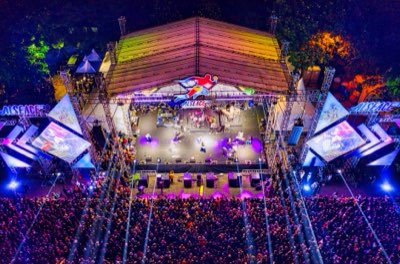
The heat of a crowded concert hall rises toward the ceiling as artists from different generations join hands on stage. The energy of a shared musical moment sends a visible shiver through the audience.
His work was never just about dominating a specific era; it was about setting a milestone. He proved that hip-hop could function as a complex, high-art genre rather than just a medium for street storytelling.
His style played a pivotal role at the intersection of G-Funk and Neo-Soul. That willingness to cross boundaries remains vital in 2026, an era where genre-blending is the industry norm. He was an artist who understood that collaboration is a way to expand one's own creative boundaries.
Let's look at a summary of his unique collaborative style.
Summary of the Shock G Collaboration Style
| Category | Key Feature | Musical Effect |
|---|---|---|
| Sound Composition | Organic fusion of funk and hip-hop | Creates a unique, boundary-breaking sonic identity |
| Production | Sophisticated layering and vocal modulation | Produces a psychedelic, atmospheric mood |
| Collaboration Strategy | Customized beat design for each artist | Maximizes the individual personality of the performer |
To replicate this level of production, one must follow a specific creative workflow:
- Identify the Core Rhythm: Establish a foundational beat that captures the essential energy of the artist's flow.
- Layer the Melodic Counterpoint: Introduce funk-inspired elements like synth or brass that act as a second "voice" to the rapper.
- Sculpt the Vocal Space: Adjust the frequency of the instruments to ensure the vocals sit perfectly within the sonic architecture.
- み
- While musical experimentation can sometimes create a gap between the artist and the mainstream, it is often the primary engine for the birth of new genres.
The meaning and future of his musical footprint
Sitting alone in an empty studio at 3:00 AM, you look back through old recordings. The deep resonance of the music fills the cold room, turning the silence into something warm and alive. According to World Bank, France recorded international tourist arrivals of 117,109,000 in 2020.
The record of Shock G's collaborations is more than just a list of credits. It is a testament to how hip-hop can build its own language, communicate with others, and evolve. His experiments pushed the horizons of the genre and provided the foundation for much of today's crossover music.
His legacy will continue to be reinterpreted by new generations of producers and artists. His refusal to be boxed in by genre serves as a symbol of the infinite possibilities within music.
History flows constantly, but great footprints remain visible in the current.
Remembering a Hip-Hop Legend
A Shock G collaboration was more than a feature; it was an artistic communion. We invite you to experience the moment where genre boundaries dissolve through his music.
* Focus on Depth: Listen closely to the harmony between the beat's texture and the vocal delivery. * Contextualize History: Feel how the experimental spirit of 90s hip-hop was physically manifested. * Trace the Influence: Explore how his specific style paved the way for modern production techniques.





Comments 0